Color Psychology in Home Offices: Design a Space That Works on Your Mind
Today’s chosen theme: Color Psychology in Home Offices. Build a workspace that fuels focus, creativity, and calm by understanding how hues, light, and materials influence your mood and performance. Read on, experiment boldly, and share your palette choices with our community.
The Science Behind Color and Productivity
Warm tones can feel energizing and social, while cool tones often promote focus and calm. If you juggle deep concentration and collaboration, consider a cool foundation with warm accents to cue transitions and nudge your brain into the right gear.
The Science Behind Color and Productivity
Highly saturated colors can be stimulating but tiring over long sessions. Softer, muted shades reduce visual noise and mental fatigue. Adjust brightness to match task intensity, balancing alertness with comfort for sustained attention without eye strain.
If Your Day Demands Deep Focus
Start with cool neutrals—soft grays with blue undertones or gentle slate—then add minimal accents. A muted navy chair or steel-blue storage can steady attention while keeping visual clutter low. Share your focus palette and why it works for you.
If You Thrive on Creative Brainstorms
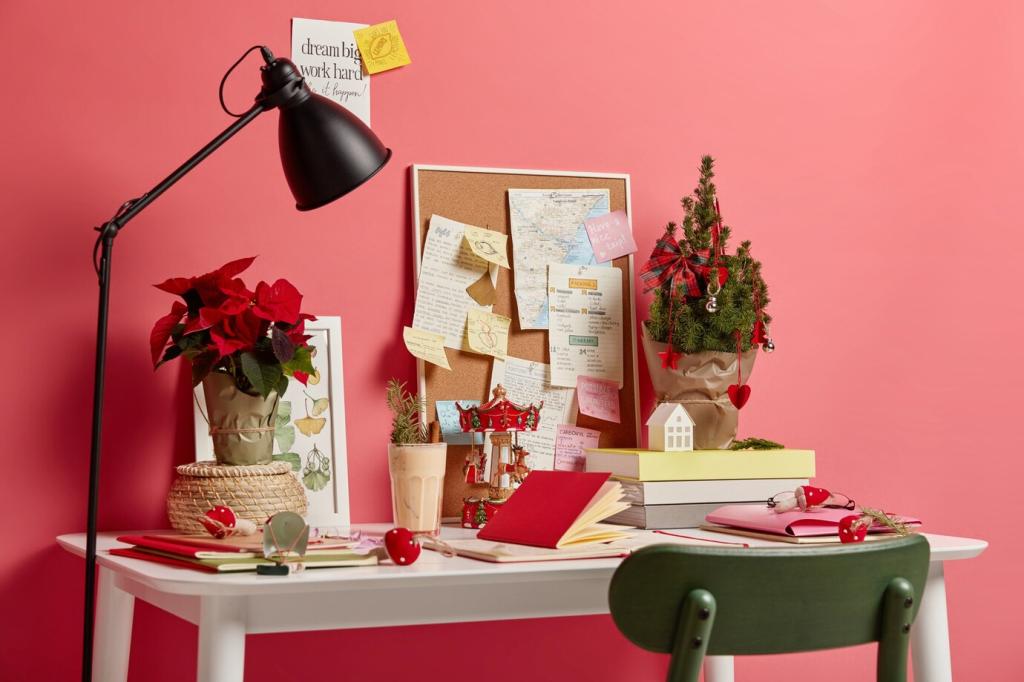
Ground the room in a quiet base, then layer energizing accents in coral, teal, or chartreuse. Use saturated color in movable pieces—posters, textiles—so you can toggle intensity. Tell us which accent hue reliably sparks your fresh ideas.
If You Live on Video Calls
Choose a flattering backdrop: soft mid-tone greens, dusty blues, or warm taupes reduce glare and flatter skin. Avoid high-contrast stripes that flicker on camera. Post a snapshot of your backdrop and ask for community feedback on presence.
North light cools colors, south light warms them, and east-west rooms shift dramatically across the day. Sample your palette on each wall, view during work hours, and note changes. Comment with your room orientation for tailored suggestions.
Light and Color: The Crucial Interaction
Use bulbs around 4000K for balanced clarity, or 3000K for a softer, calmer feel. Keep fixtures consistent to prevent color drift. Dimmable lighting lets you dial energy up or down, matching tasks without repainting your entire space.
Light and Color: The Crucial Interaction
Zoning with Color in Compact Spaces
Paint a single wall behind your desk in a grounding shade—deep green, ink blue, or muted terracotta. It visually anchors your workstation, signals “work mode,” and minimizes distractions beyond your monitor. Post before-and-after photos to inspire others.
Dusty blues, sage greens, and gentle mauves slow the nervous system and soften harsh edges. Pair with tactile materials—linen, wood—to complete the calming effect. Tell us which color-soothing combo has helped you through high-pressure deadlines.
Mood Management and Mental Well-Being
Use small, saturated accents—citrus yellow sticky notes, a coral notebook, a cobalt mug—to spark momentum when your energy dips. Keep them movable so your space stays balanced during longer, more demanding work sessions without overstimulation.
Personal and Cultural Color Meanings
Colors carry different meanings globally—white can symbolize purity or mourning, red luck or warning. If you collaborate internationally, consider backdrops that communicate professionalism universally. Ask your audience which colors feel welcoming or intense in their cultures.
Personal and Cultural Color Meanings
Think of rooms you loved growing up or places that calm you now. Borrow those hues for authentic comfort. Designing from personal memory strengthens attachment, making your office a place you naturally want to spend meaningful time.